Efficient in energy consumption & emissions
As a resources company, we operate many energy-intensive processes in the entire value chain, from extraction of raw materials and production, to transportation of the finished product. As part of our business processes, we consider energy use and logistics-related activities. Changes and process improvements are continuously evaluated and implemented.
Our climate strategy
We want to continue to actively advance the energy transition and support the goals of the Paris Climate Agreement. We want to achieve greenhouse gas neutrality at our production sites as early as 2045. Under certain conditions, such as the expansion of renewable energies or better grid connections, we can achieve this goal. Our goal is to achieve a 25% reduction in our CO2 emissions (Scope 1 and 2 of the manufacturing sites) compared to the baseline year 20201 by 2030. In addition, we want to reduce emissions by 60% by 2040 and achieve greenhouse gas neutrality by 2045.
Our path to greenhouse gas neutrality (base year: 2020)
- 2030 Emission reduction of 25%
- 2040 Emission reduction um 60%
- 2045 Greenhouse gas neutrality

1 The emission value of the base year is adjusted in the event of significant changes in primary production volumes, while maintaining the ambition for decarbonisation.
Our steps towards further CO₂ reduction
The planned implementation of several new major measures will enable an acceleration of decarbonization. In general, the ramp-up of renewable energies replaces natural gas, for example, the switch from natural gas to biomass at our Borth salt works.
Our goal is to reduce CO2 emissions by 25% from 2020 to 2030 and by 60% by 2040. There are no plans to use carbon offsets.
Making energy efficient
Our energy management system contributes to more efficient use of the sources of energy used, and continuous optimization of the Group's energy costs. We operate a DIN EN ISO 50001 certified energy-management system at all of our German companies with production sites. We regularly conduct energy audits in accordance with DIN EN ISO 16247 at all other German companies. A Group-wide concept for energy management is being developed and the introduction of ISO 50001 at our sites outside Germany has begun.
The energy sources used differ depending on the location of the mines and production facilities. 86 percent of the steam and power generation in Germany uses natural gas as the primary energy source, the remaining 14 percent is from energy generated by an incineration plant. Five German potashproducing sites had their own highly efficient power plants, which are operated on the principle of combined heat and power (CHP). They operate at 90 percent efficiency. We also operate two out of seven drying facilities using the CHP system.
Due to the use of solution mining as an extraction method at our new mine in Bethune, Canada, as well as the continuing expansion of the other underground raw material mining areas, and the higher energy costs this entails, we anticipate increasing specific demand for primary energy.
Optimizing logistics processes
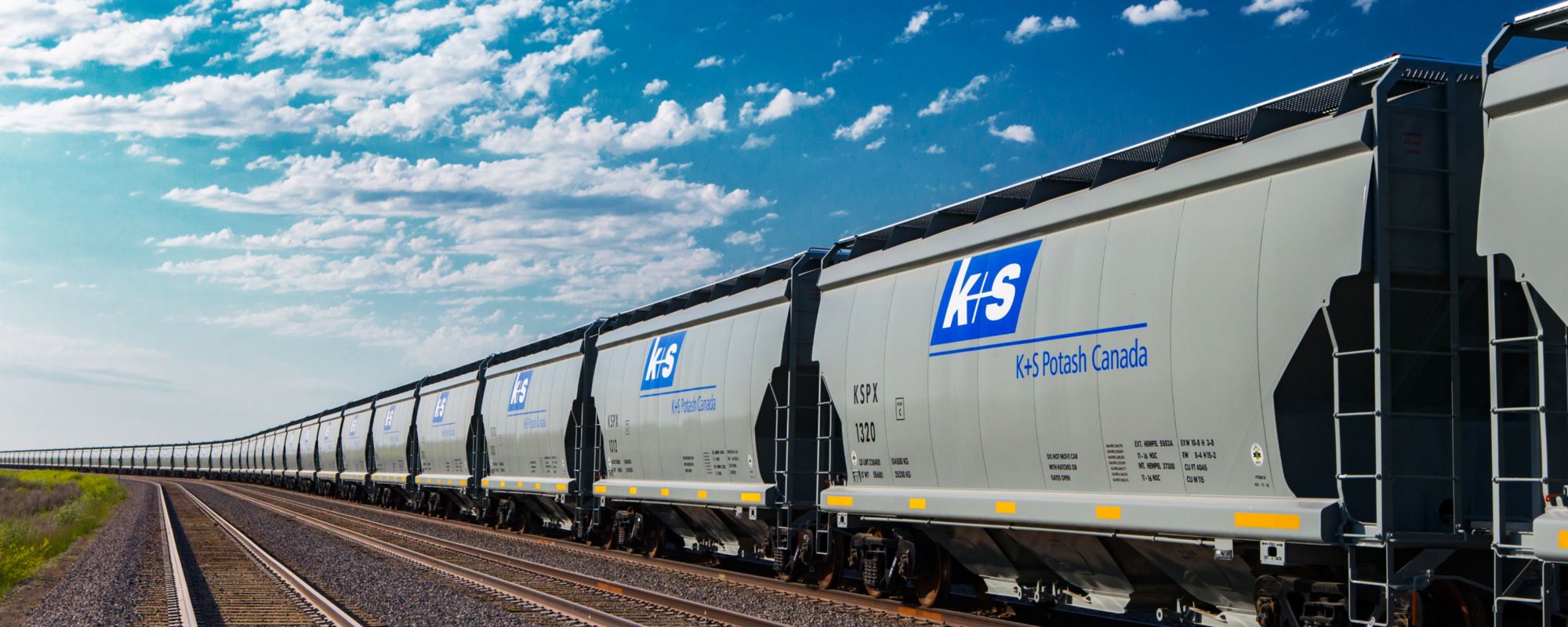
Our international logistics network coordinates the transportation of our products to customers in various regions around the world. Transport chains are planned, managed, and regularly reviewed. In doing so, factors such as modes of transport, distances, availability, as well as operational and regulatory requirements are taken into account. Logistics experts at different locations work together with transport and logistics service providers to organize delivery processes in line with the respective requirements.
-
Our target is to reduce our absolute CO2 emissions in the K+S Group worldwide by 25 percent by 2030.
-
Our target is to reduce specific greenhouse gas emissions (CO2) in logistics operations by 10 percent by 2030.


